

A rotted wooden extinguisher box and a bracket rattled loose from road vibration have nothing in common except one thing, both show up constantly in fire inspection reports across Western Canada. One is a slow environmental failure. The other is a fast mechanical one. Which of those two problems your site has is the real question behind caddy versus bracket, not which product sounds tougher on paper.
Why a Fire Extinguisher Caddy and a Bracket Solve Different Problems
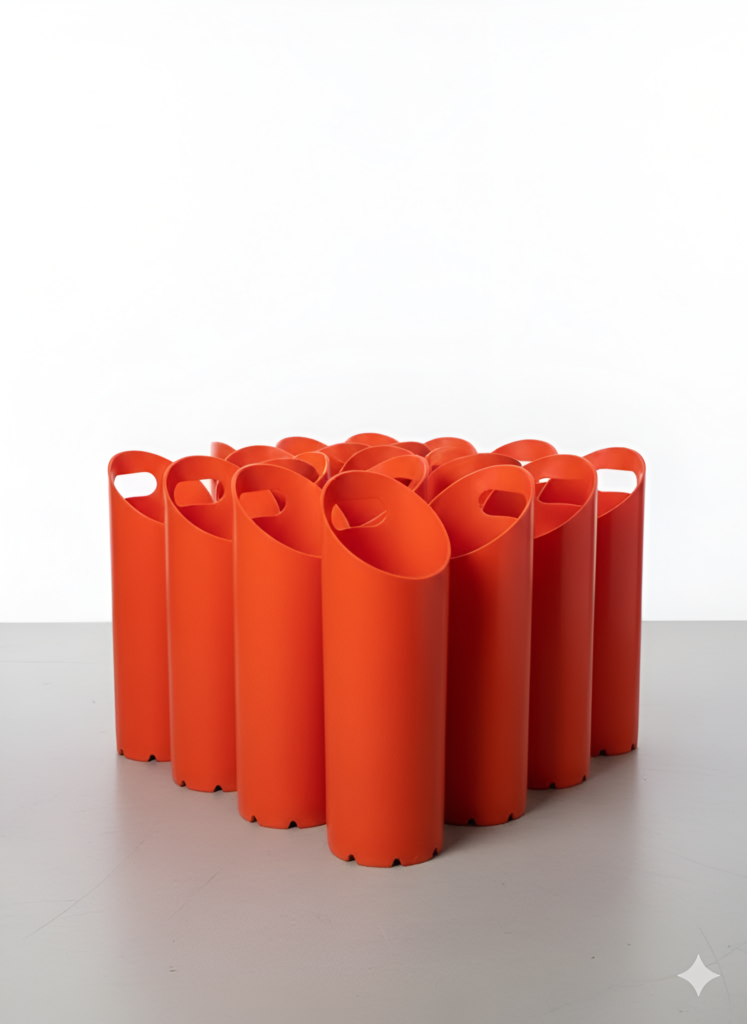
An extinguisher parked at ground level or bolted to a wall gets worn down by the environment around it, standing water, sun, a wooden enclosure swelling and rotting over a wet season. That damage takes years to show up, and it’s what an industrial fire extinguisher caddy like the Extinguisher Caddy was designed to stop.
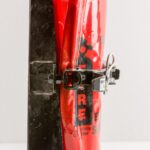
An extinguisher riding on a truck or an excavator has a totally different enemy. Road vibration and equipment shake work rubber straps and spring clips loose in months, not years, and most of the time the extinguisher itself is fine, it’s the mount that’s given up. I’ve pulled extinguishers less than a year old off equipment because whatever was holding them had already failed. That’s the problem an Extinguisher Grip Bracket exists to solve.
Here’s the quick version, before the longer explanation below.
| Extinguisher Caddy | Extinguisher Grip Bracket | |
| Best for | Stationary, ground-level or wall-mounted extinguishers | Extinguishers mounted on vehicles or moving equipment |
| Main threat it solves | Weather, standing water, UV, corrosion | Vibration loosening the mount over time |
| Sizes covered | 5, 10, 20, 30 lb, K Class, pressure water | 2.5 to 30 lb, K Class, pressure water, cartridge-operated |
| UV / weather rating | 7-year UV rating, full enclosure | Weather-resistant, not a full enclosure |
| Price | $160 | $90 (standard) or $125 (stainless steel) |
| NFPA 10 Section 6.1.3.7 | Yes | Yes |
When a Construction Site Fire Extinguisher Caddy Makes Sense
If the extinguisher stays put, ground-level or wall-mounted, and weather is the real threat, build around a caddy. The Extinguisher Caddy channels water away through eight molded drainage paths instead of letting it pool at the base the way a plywood box always eventually does, and the copolymer body carries a seven-year UV rating, well beyond anything vinyl or untreated timber can hold up.
The math plays out over time too. A wooden box system, once you count rebuilding, repairs, and the extinguishers that get replaced early from corrosion damage, runs past $1,050 over ten years. The Caddy system lands closer to $300 across that same stretch, maintenance and replacement covers included. For a construction site fire extinguisher caddy sitting at a yard entrance or a remote trailer for years on end, that gap is real money.
When a Vehicle Fire Extinguisher Bracket Makes Sense
If the extinguisher’s riding on something that moves, a caddy isn’t the tool for that job, you need a vehicle fire extinguisher bracket built to survive vibration and still let someone grab the cylinder fast in an emergency. The Grip Bracket runs a patented tension assembly holding 300 lb of grip, with a V-type base and bendable fingers that seat properly on curved or irregular equipment frames where a flat-base bracket never sits right to begin with.
One bracket covers every size too, 2.5 lb through 30 lb, plus K Class, pressure water, and cartridge-operated units. That matters more than it sounds like it should when you’re running a fleet with mixed extinguisher sizes across dozens of vehicles. I’ve installed this bracket on garbage trucks, gravel trucks, excavators, Bobcats, even locomotives and conveyor lines. A universal fire extinguisher bracket takes the guesswork out of a moving fleet before it becomes a problem. There’s a stainless steel version too, for marine, coastal, and chemical-processing sites where the mount itself needs to survive corrosion, not just hold the cylinder.
Do You Need an Industrial Fire Extinguisher Caddy, a Bracket, or Both?
Plenty of facilities have extinguishers on fixed walls and on a fleet of vehicles at the same time, which means both failure modes are happening at once. Trying to solve both with one product usually means solving neither one well. Worth knowing too, the Caddy already ships with two covers and a wall hook, so a stationary installation isn’t missing a mounting option, it’s just built for standing still, not for riding on something that shakes all day.
If you’re outfitting equipment that moves, check out the universal fire extinguisher bracket alongside the full Extinguisher Caddy system, and we can help sort out which combination fits your site.
For more on how our covers and caddies work as a full protection system, read our post on What Is a Weatherproof Industrial Fire Extinguisher Cover and How Does It Keep You NFPA Compliant?
FAQs
Can the Extinguisher Grip Bracket be used instead of a caddy for a stationary extinguisher? It can, and it meets NFPA 10 Section 6.1.3.7 accessibility requirements on its own, but it won’t enclose the cylinder the way a caddy does. For something exposed to weather for years at a stretch, the caddy gives more complete protection.
Does the Extinguisher Caddy work for extinguishers mounted on vehicles? Not really. The Caddy is built for ground-level or fixed wall placement. For anything on a moving vehicle or piece of equipment, the Grip Bracket’s tension assembly is built specifically for vibration and irregular mounting surfaces.
What sizes of extinguishers fit each product? The Caddy fits 5, 10, 20, and 30 lb units along with K Class and pressure water extinguishers. The Grip Bracket covers that same range plus 2.5 lb and cartridge-operated units, all in one universal design.
Are both products NFPA compliant? Yes. Both are built to support NFPA 10 Section 6.1.3.7 requirements for protecting extinguishers from physical and environmental damage while keeping them visible and accessible.
About AR Fire Equipment
AR Fire Equipment Innovations Inc. is based in Calgary and grew directly out of fire inspection work through Activate Fire Safety, after reviewing more than 25,000 extinguishers across Western Canada and running into the same handful of failures again and again on construction sites, fleets, and industrial facilities. That field experience shaped the product lineup, covers, caddies, and brackets built around the conditions that break standard equipment out here, not gear adapted from something designed for a warehouse somewhere milder.
Whether your site needs an industrial fire extinguisher caddy for stationary units or a vehicle fire extinguisher bracket for a fleet on the move, get a quote from AR Fire Equipment or browse the full product lineup to see what fits.