

“The extinguisher was right there. The bracket just wouldn’t let go.”
That’s not an unusual thing to hear during a post-incident debrief. The extinguisher was fully charged, correctly positioned, and within arm’s reach but the mount was so corroded, or of the wrong fit that it never let go off the cylinder. This is a classic case of lost in plain sight. Everyone was so focused on the extinguisher that nobody thought about the bracket.
We’ve seen this pattern often enough across commercial and industrial fire protection work in Western Canada that we now treat the bracket as seriously as the unit itself. An extinguisher that can’t be deployed in the first ten seconds of a fire isn’t doing its job, and in most cases, the reason it can’t is the mount.
Here are three situations we encounter regularly, and what the right extinguisher grip bracket actually changes in each one.
The Fleet Manager with a Mixed Inventory
A transportation company running a fleet of 40 service trucks doesn’t always get to standardise every extinguisher across the entire operation. Different trucks get serviced at different times, replacement units come from different suppliers, and over a few years the fleet ends up with a mix of cylinder sizes and types that were each correct at the time of purchase.
The bracket problem this creates is straightforward. A mount sized for a 2.5 lb ABC unit doesn’t hold a 5 lb unit properly. A bracket that fits snugly on one cylinder rattles on another. Across 40 trucks, the fleet manager is either stocking multiple bracket specifications or accepting that some units aren’t as secure as they should be.
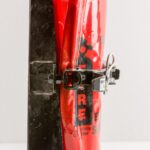
A universal fire extinguisher bracket using a patented adjustable grip mechanism resolves this without requiring the fleet to standardise its extinguisher inventory first. The bracket adjusts to the cylinder rather than the other way around, which means one component specification covers the full range of cylinder sizes the fleet actually runs. For a fleet manager, that’s one SKU to stock, one installation procedure to train on, and one less variable to manage during vehicle inspections.
AR Fire Equipment’s heavy duty fire extinguisher bracket is built exactly for this application, with the structural integrity to handle road vibration, temperature cycling, and the day-to-day demands of a working vehicle fleet across Canadian conditions.
The Construction Site Supervisor Who Learned the Hard Way
Construction sites have a particular relationship with fire extinguisher mounting. Equipment moves constantly, installations are often temporary, and the bracket that got spec’d for a wall-mounted unit on a building site ends up on a piece of heavy equipment because that was what was available on the day.
One site supervisor we spoke with described finding, during an end-of-project fire safety audit, that three of the extinguishers on excavators had brackets so corroded from continuous moisture and chemical exposure that the quick-release mechanism wouldn’t operate smoothly. The extinguishers were fully charged. The brackets had let them down.
This is precisely the scenario the stainless steel extinguisher bracket addresses. Standard steel hardware corrodes in the combination of moisture, excavation chemicals, concrete compounds, and seasonal exposure that construction sites generate over a multi-month project. Stainless construction holds its structural integrity across that exposure cycle, which means the bracket performs the same at the end of the project as it did at the start. The price difference between a standard and stainless bracket is roughly $35. Against a failed bracket mid-project and the compliance consequence of a non-accessible extinguisher during an audit, it’s not a difficult calculation.
The Processing Facility That Needed It All to Work Together
A food processing facility in Alberta was running extinguishers across a combination of wall-mounted indoor units and vehicle-mounted outdoor installations. The indoor units were straightforward. The outdoor installations were the problem.
Outdoor brackets in a facility that runs wash-downs, handles cleaning chemicals, and operates through Alberta winters face an environment that standard mounting hardware isn’t rated for. The facility’s maintenance manager wanted a single solution that would handle the full range of conditions without requiring separate specifications for indoor and outdoor applications.
AR Fire Equipment’s heavy duty fire extinguisher bracket handled the mounting side. For the outdoor vehicle and equipment installations, the team paired the bracket with AR Fire Equipment’s extreme temperature fire extinguisher cover, which protects the extinguisher itself across the UV load, moisture, and temperature cycling those outdoor units face between inspections. The bracket keeps the unit properly positioned and immediately accessible. The cover takes on the environmental exposure. Together they function as the commercial fire protection accessories system the facility needed without requiring custom specifications for each application.
The facility manager’s observation after the first inspection cycle following the upgrade was straightforward. No condition-related deficiencies on any of the outdoor units for the first time since the facility opened.
What Makes the Difference in Practice
NFPA 10 Section 7.1.3 requires that fire extinguishers be installed in locations where they are readily accessible and immediately available for use. The bracket is the component that determines whether that requirement is met in practice, not just on paper.
A well-specified extinguisher grip bracket keeps the unit correctly positioned, releases cleanly under pressure, and holds its performance across the operating conditions the application actually generates. AR Fire Equipment’s grip bracket and stainless steel extinguisher bracket are built to deliver exactly that, across fleets, construction sites, and fixed industrial installations, with a 10% bulk discount on orders of ten or more.
Explore AR Fire Equipment’s full range of commercial fire protection accessories at arfireequipment.com or call +1 (403) 815-9527
FAQs
1. Why is a heavy duty fire extinguisher bracket important?
A heavy duty fire extinguisher bracket helps keep extinguishers secure in high-vibration environments such as vehicles, construction equipment, and industrial facilities while ensuring they remain readily accessible during an emergency.
2. What are the benefits of a stainless steel extinguisher bracket?
A stainless steel extinguisher bracket offers superior resistance to corrosion, moisture, chemicals, and outdoor exposure, making it ideal for demanding commercial and industrial applications.
3. Can a universal fire extinguisher bracket fit different extinguisher sizes?
Yes. A universal fire extinguisher bracket is designed to accommodate multiple cylinder sizes, helping fleets and facilities simplify inventory management and installation requirements.
4. How do fire extinguisher brackets and covers work together?
The bracket secures the extinguisher for quick access, while an extreme temperature fire extinguisher cover helps protect the cylinder from weather, UV exposure, and temperature fluctuations. Together, they provide a more complete commercial fire protection accessories solution.